
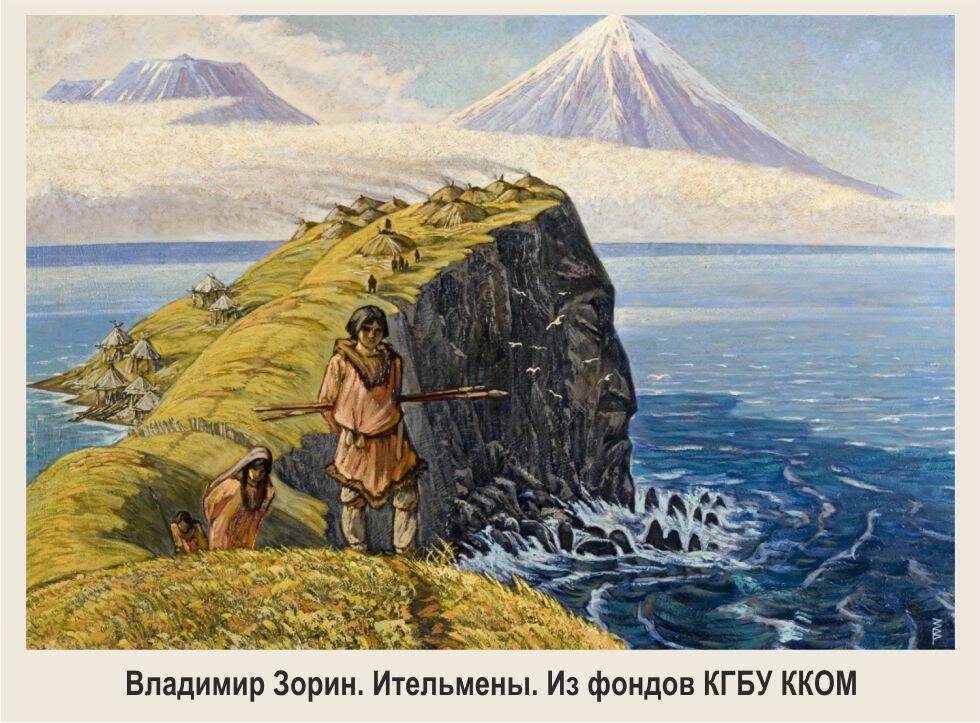
На Камчатке живут четыре коренных народа: ительмены, коряки, эвены и алеуты. Каждая культура выросла в собственной экологической нише и сохранила язык, обряды и ремёсла, многим из которых тысячи лет.
Ительмены
Самый древний народ Камчатки, потомки палеоазиатского населения полуострова. Жили оседло вдоль рек, ловили лосося, строили полуземлянки и летние свайные дома — балаганы. Создали богатую устную традицию мифов о Кутхе — Вороне-создателе.
Праздник Алхалалалай
Главный ительменский праздник окончания хозяйственного года. Включает обрядовое очищение и многочасовой танцевальный марафон — современный рекорд непрерывного исполнения превышает 16 часов.
Коряки
Делятся на оседлых (нымыланов) — рыболовов побережья, и кочевых (чавчувенов) — оленеводов внутренней тундры. Кочевые коряки до сих пор ведут традиционное хозяйство: стада в несколько тысяч голов, переносные яранги.
Эвены
Тунгусоязычный народ, пришедший на Камчатку с запада в XVII–XVIII веках. Классические таёжные охотники и оленеводы. Эвенские мастерицы славятся вышивкой бисером по ровдуге — замше из шкуры оленя.
Алеуты Командорских островов
Переселены на Командоры в 1820-х годах. Морские охотники. Сегодня алеутская община сохраняется в селе Никольское на острове Беринга — около 300 человек.
«Кто слышит Ворона — слышит Камчатку.»